The meaning of an astrocartography line
What every astrocartography line means, planet by planet and angle by angle. Learn how orb and angle type determine whether a line matters for a place.

Photo: Michael Hull / Unsplash
An astrocartography line marks a place on Earth where a planet from your birth chart was rising, setting, overhead, or underfoot at the moment you were born. The same planet reads differently depending on which of those four angles it's on. A Venus line doesn't say the same thing on the Midheaven that it says on the Descendant. This guide covers what every planet means on every angle. It also covers the two things that determine whether a line is worth paying attention to for a given place: proximity and angle type.
Here's one quick vocabulary note first, because it's the most common mix-up in this subject: an astrocartography line is not your natal chart's Ascendant, Descendant, Midheaven, or IC. Your own natal angles are fixed to your birth location. They don't move. What moves, what gets drawn across the whole world, is a separate angle for each individual planet. It's the specific longitude where that planet was rising, setting, culminating, or anti-culminating at your exact birth moment. A "Venus MC line" means the place where Venus was overhead when you were born. It has nothing to do with what sign or degree your personal Midheaven sits in. Keep the two straight and the rest of this guide is simple. Blur them and every line on the map turns into a different, wrong idea.
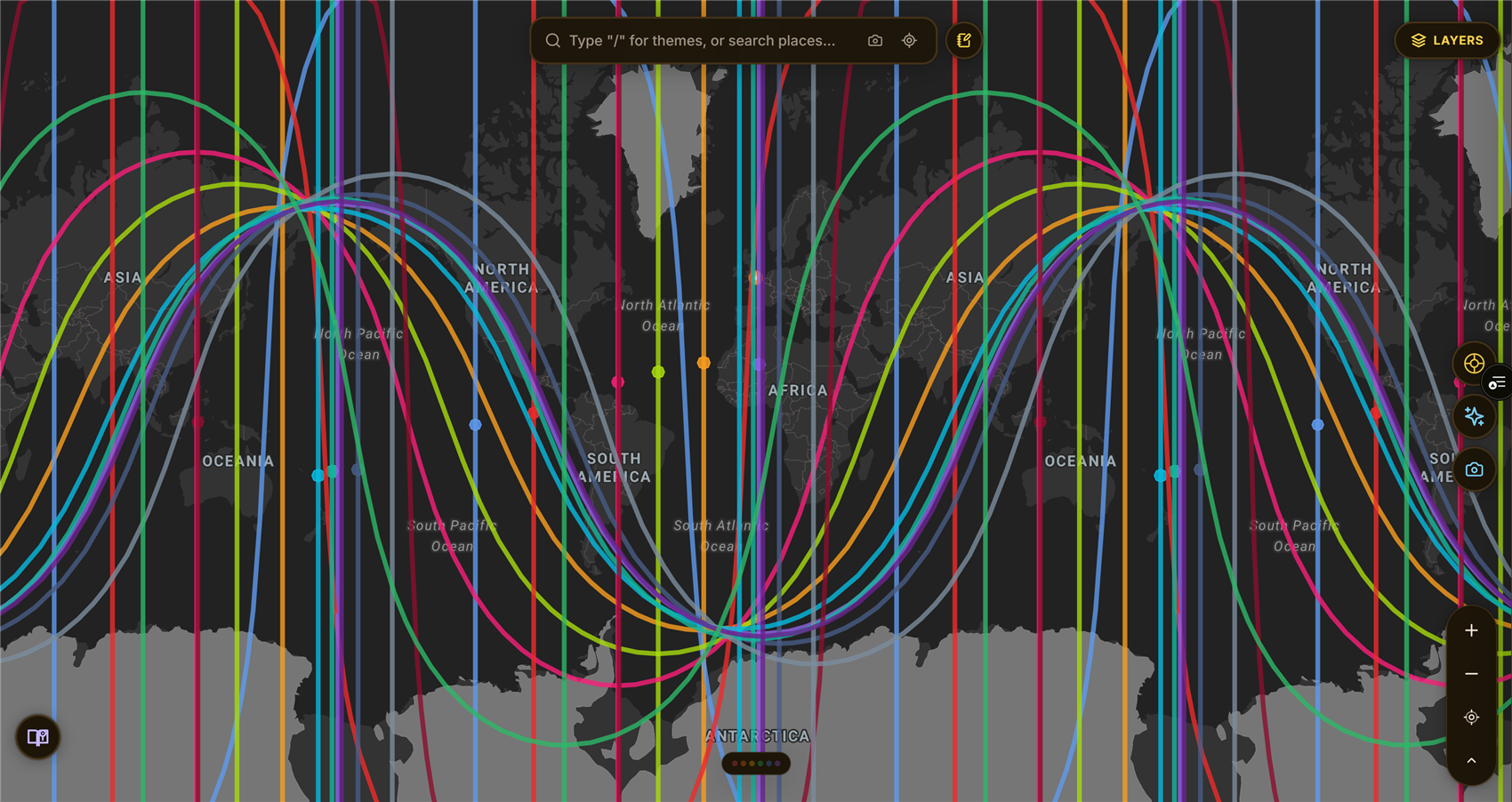
Every line in one view: each planet's four angles, drawn across the entire Earth for one birth chart. The rest of this guide is about reading a single one of these at a time.
How to actually read a line
Two things determine whether a line is worth paying attention to. Most people only ever learn one of them.
Proximity: lines have an orb, not a hard edge
A line isn't a wall you're either standing on or completely outside of. It has an orb: a band on either side where the planet's influence tapers off the farther you get from the exact line. Living directly on a Jupiter line is different from living three hundred miles away from one. The effect is real in both cases, but it thins with distance. Think of a radio signal weakening as you drive out of range, instead of cutting out at a fixed boundary. A city the line runs straight through is a different proposition than a city that's merely in the line's wider zone of influence. Both matter, but not equally. ELA Map's Deep Dive panel always tells you which one you're looking at: it reports the exact distance from any place you select to the nearest line.
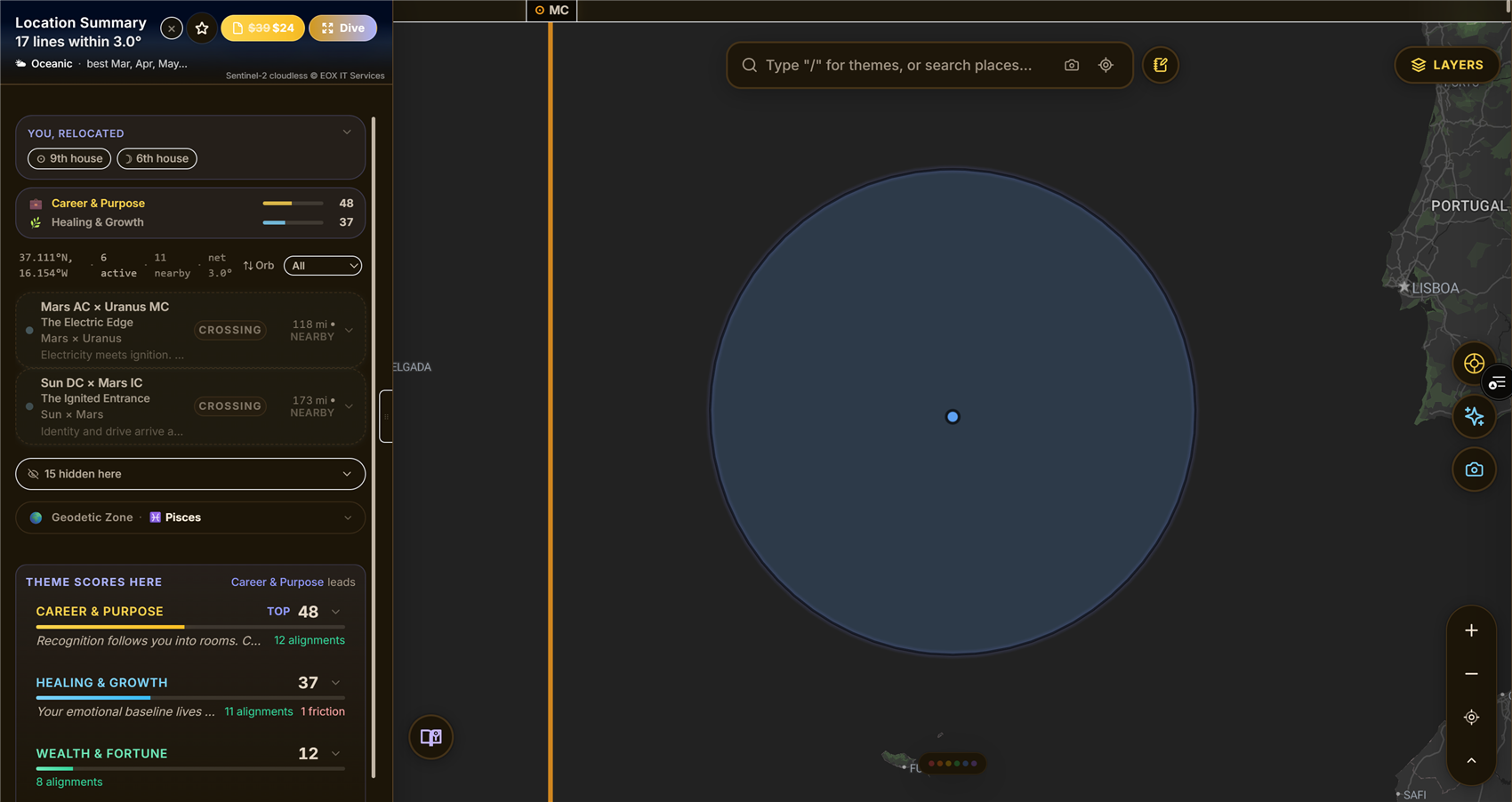
Reading a point instead of guessing at it: click anywhere and ELA Map names the planet, the house, and what it's actually contributing there.
Angle type: the same planet tells a different story on each one
This is the part that actually changes what a line means. It's the same four-angle grammar behind every reading in ELA Map:
- Rising (Ascendant): the planet leads. It's the first thing a place pulls out of you, often before you've consciously decided anything. Identity, first impressions, how you show up.
- Setting (Descendant): the planet arrives through other people. It shows up in who you meet, who you partner with, and what they ask of you. It's the "other" half of every relationship you form there.
- Overhead (Midheaven): the planet goes public. Career, reputation, the version of you the world files under your name. This is often the most important angle for ambition-driven moves.
- Underfoot (IC): the planet works in private. Home, roots, the inner life nobody photographs. It's what the place does to you when no one's watching.
The same planet on two different angles can feel like two different planets. Saturn overhead reads as discipline and hard-won authority. Saturn underfoot reads as a heaviness in the home life that's much easier to miss until you're already living it. Angle first, then planet: that order is what makes a line legible instead of just a color on a map.
Planet × angle quick reference
| Planet | Rising (AC) | Setting (DC) | Overhead (MC) | Underfoot (IC) |
|---|---|---|---|---|
| Sun | Confidence, visibility, vitality | Partners who spotlight you | Recognition, achievement, the "fame line" | Pride of place, a home you're proud of |
| Moon | Emotional exposure, instant familiarity | Nurturing or needy relationships | Public-facing caretaking, popularity | Deep domestic comfort, roots |
| Mercury | Quick thinking, restlessness, chatter | Talkative or transactional partners | Writing, media, teaching, commerce | A busy, idea-filled home life |
| Venus | Personal beauty, artistic flair | Romance, marriage, easy partnership | Nourishing success, love that supports work | Material ease, comfort, indulgence |
| Mars | Assertiveness, physical drive, friction | Combative or passionate partners | Ambition, competition, hard-won status | Domestic tension or fierce home defense |
| Jupiter | Optimism, opportunity, expansion | Generous, expansive partnerships | Luck, status, professional growth | Abundance and ease at home |
| Saturn | Seriousness, restriction, discipline | Committed but demanding partners | Authority earned slowly, hard work | Isolation or a heavy sense of duty |
| Uranus | Unpredictability, independence, reinvention | Unconventional or sudden partnerships | Disruption, innovation, an unstable public role | Instability at home, sudden change |
| Neptune | Dreaminess, sensitivity, blurred boundaries | Idealized or confusing partnerships | Ambiguous reputation, creative or spiritual calling | A dissolving, dreamlike home life |
| Pluto | Intensity, transformation, power struggles | Obsessive or transformative partnerships | Power, control, radical career shifts | Deep psychological upheaval at home |
(Chiron, the Nodes, and other points follow the same rising/setting/overhead/underfoot logic. See Chiron and Node lines and the FAQ below.)
Deep dives, planet by planet
Every planet below also has its own full guide, covering all four of its angles in more depth than this overview:
- Sun line meaning · Moon line meaning · Mercury line meaning
- Venus line meaning · Mars line meaning · Jupiter line meaning
- Saturn line meaning · Uranus line meaning · Neptune line meaning · Pluto line meaning
- Chiron and Node lines
Sun line astrocartography meaning

Photo: Sven Pieren / Unsplash
A Sun line marks where you're most likely to shine: visibility, confidence, and a kind of easy vitality that other people notice before you name it. The Sun is the one body whose lines rarely read as outright difficult. It mostly amplifies whatever you already are, for better and occasionally for worse.
Career-minded readers usually care most about the Sun MC line, sometimes called the fame line. It marks places where professional recognition and social advancement come with less resistance than usual, often through helpful contacts who notice you without much effort on your part. The Sun AC line works more personally. It boosts confidence in your presence itself: the sense of being seen the moment you walk in a room, sometimes to the point of feeling like the center of attention whether you asked for it or not. The Sun DC line tends to draw partners who admire and spotlight you. That's flattering right up until the relationship starts to feel more like an audience than an equal footing. The Sun IC line is the quietest of the four: a private glow of self-worth at home, pride in the life you've built there, even if nobody outside sees it.
Full guide: Sun line astrocartography meaning →
Moon line astrocartography meaning

Photo: Lukas Robertson / Unsplash
The Moon governs emotional life, so its lines run closer to the surface than most. They also move fastest of any body: the Moon changes angle roughly every couple of hours as the Earth turns. That's part of why a Moon line can make a place feel intensely, almost embarrassingly personal.
A Moon IC line tends to feel like an instant sense of belonging: the rare place that feels like home almost immediately. That closeness cuts both ways, since old emotional patterns and family history can also surface faster there than you'd like. A Moon DC line colors relationships with a caretaking or needy quality, depending on which side of it you're standing on. You may find yourself the one being looked after, or the one doing the looking after, sometimes both at once. On the AC, the Moon makes you more emotionally legible to everyone around you: moods sit closer to the surface and are harder to hide. On the MC, it favors public-facing nurturing work: teaching, hospitality, anything where being warm and approachable is the job.
Full guide: Moon line astrocartography meaning →
Mercury line astrocartography meaning

Photo: Christian Meyer-Hentschel / Unsplash
Mercury lines sharpen communication, learning, and commerce. The mind runs faster and louder under this line. That's a gift for some kinds of work and a genuine strain for others.
An MC placement favors writing, teaching, media, and any work built on being understood clearly and often. It's a strong line for anyone whose career depends on getting an idea across a room or across a market. An AC placement tends to make you quicker-tongued and more restless, sometimes to the point of feeling scattered or overstimulated if the line runs close. It's great for networking, harder for anyone who needs quiet to think. The DC brings talkative, deal-making, idea-trading relationships: the kind built as much on conversation as chemistry. The IC keeps the mental energy at home: a house full of books, plans, and half-finished projects, rarely a dull one.
Full guide: Mercury line astrocartography meaning →
Venus line astrocartography meaning
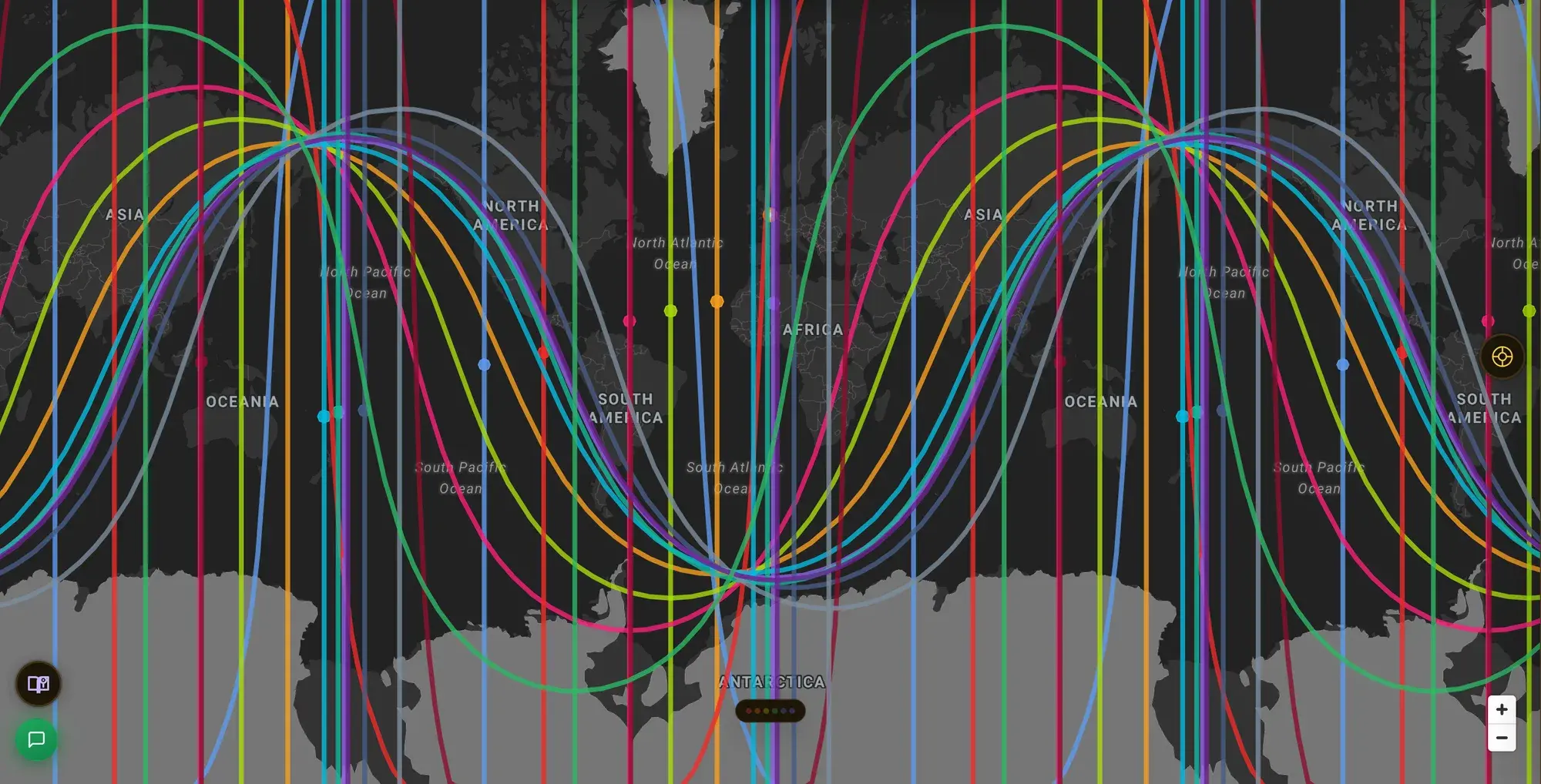
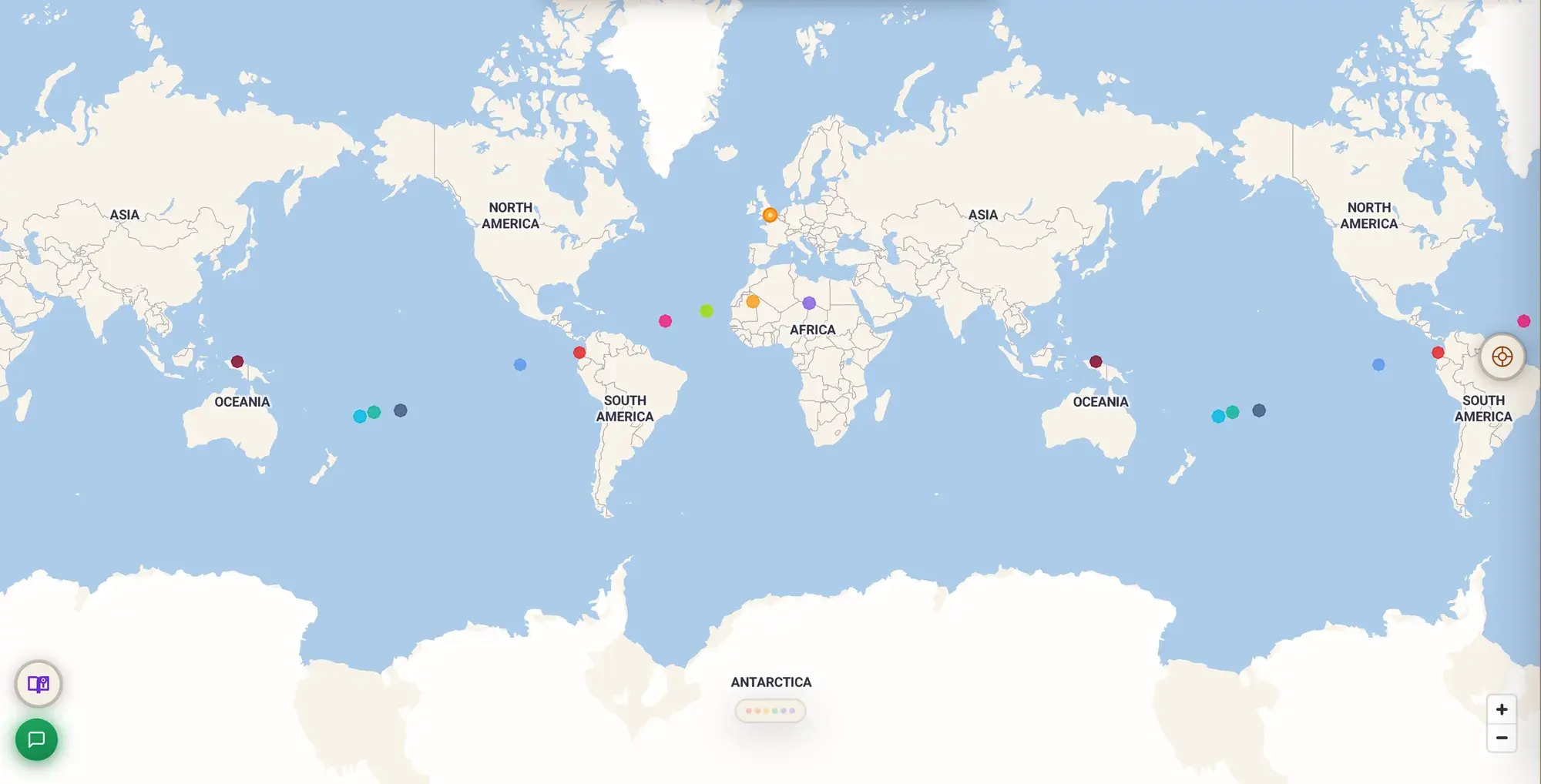
Each planet's lines carry their own color on the map. Tracing where your Venus runs, and on which angle, is a matter of looking, not decoding.
A Venus line marks where beauty, pleasure, and connection come more easily: money, art, and love all tend to loosen up under this line. All four Venus lines are generally considered favorable, which is unusual. Most planets have at least one angle that asks something hard of you, but Venus mostly doesn't.
Two carry the most weight for relationships. The Venus MC line tends toward a partnership that feels spiritually nourishing rather than merely convenient, with success and love reinforcing each other instead of competing. The Venus DC line is sometimes called the marriage line: committed relationships are more likely to form or deepen for people living there, or with partners connected to that place. The Venus AC line favors personal charm and artistic self-expression more than partnership specifically. You tend to be seen as more attractive, more graceful, an easier person to be around. The Venus IC line is the most materially comfortable of the four: easy, supported, sometimes too easy, since a life with nothing to strive for can quietly erode ambition along with the discomfort.
Full guide: Venus line astrocartography meaning →
Mars line astrocartography meaning
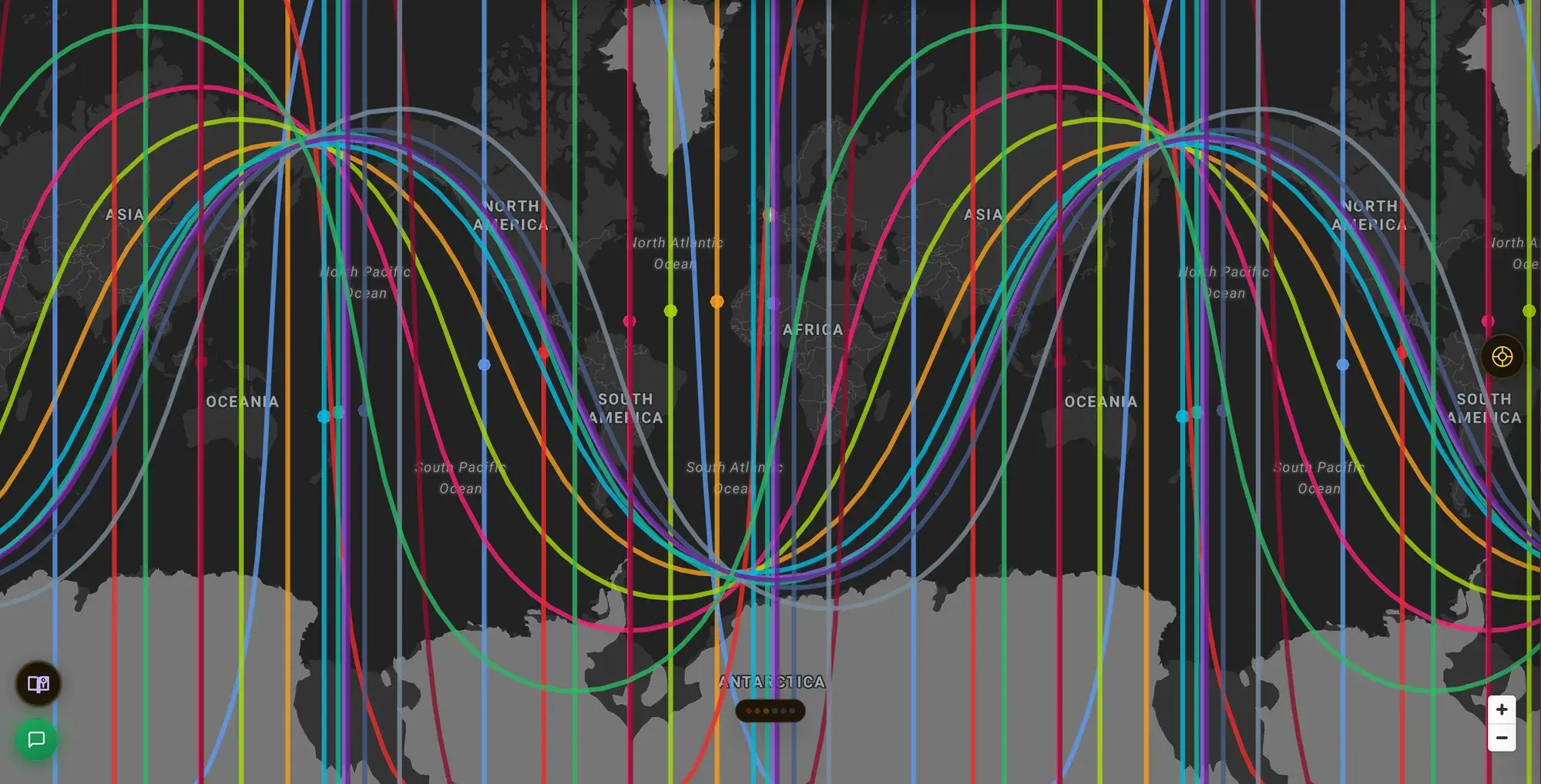
All of a chart's lines at once. Picking your Mars lines out of this weave, and reading only them, is exactly what the map's per-planet filters are for.
Mars sharpens drive, assertiveness, and competition. It's the line most likely to run hot in both directions, closer to a double-edged sword than any other planet on this list.
On the MC, it fuels ambition and a willingness to compete hard for status. It's a strong line for entrepreneurs, athletes, and anyone whose work rewards aggression and initiative. On the DC, it can bring passionate partnerships or outright conflict, often both at different points in the same relationship. Mars rarely does anything by half measures. On the AC, it shows up as physical energy and a quicker temper: more assertive, more visible, sometimes more accident-prone, since Mars near your presence tends to raise the stakes of everyday friction. The IC can bring domestic tension or, read the other way, a fierce protectiveness over home and family. Mars lines reward people who already run hot and want more fuel. They're a heavier lift for anyone looking for calm.
Full guide: Mars line astrocartography meaning →
Jupiter line astrocartography meaning

Photo: Johannes Plenio / Unsplash
Jupiter is the classic "good luck" line: expansion, opportunity, and optimism, wherever it falls. It's often the first line people ask about, and for good reason. More of these placements read as favorable than for almost any other body.
A Jupiter MC line tends to mark professional growth that comes with less friction than usual: promotions, recognition, and doors that open with less pushing than you're used to. A Jupiter IC line brings abundance and ease into home life, often literally: more space, more comfort, a sense of plenty. On the AC, Jupiter reads as an expansive, generous presence. People tend to trust you faster, take you at your word, extend you the benefit of the doubt. The DC brings generous, expansive partnerships: relationships that grow you rather than constrain you. The one real risk with Jupiter lines isn't that they're bad. It's that "more of everything" includes more of whatever you were already prone to overdoing, whether that's spending, eating, or overpromising.
Full guide: Jupiter line astrocartography meaning →
Saturn line astrocartography meaning

Photo: Claudio Biesele / Unsplash
Saturn is the line people are quickest to fear and slowest to actually understand. It doesn't mean bad luck. It means structure, restriction, and effort that pays off slowly rather than quickly. That's a very different thing from misfortune, even if it doesn't feel that way at first.
A Saturn MC line can mark real, durable authority: the kind built over years, not granted overnight. But it usually asks for patience and discipline first, often including a period that feels underappreciated before the recognition arrives. A Saturn IC line is the harder of the two for most people: a heaviness at home, a sense of duty or isolation that doesn't lift easily, sometimes a literal responsibility for family that lands earlier or heavier than expected. On the AC, Saturn reads as a more serious, reserved presence. You're taken seriously faster, but warmth takes longer to earn. The DC brings committed but demanding partnerships: relationships built on obligation and follow-through rather than spontaneity. Saturn lines reward people who are ready to do the work. They punish people expecting things to be easy.
Full guide: Saturn line astrocartography meaning →
Uranus, Neptune & Pluto: the outer lines

Photo: Lightscape / Unsplash
The outer planets move slowly, so their lines tend to mark generational or structural shifts rather than personal quirks. Anyone born within a few years of you will carry a version of the same outer-planet lines in roughly the same places. That doesn't make them meaningless. It means their signature is broader and slower than the inner planets', more like weather systems than individual choices.
A Uranus line brings sudden change, independence, and reinvention, for better or worse depending on how ready you are for disruption. It's strongest on the AC (a place that makes you more unpredictable and freedom-seeking) and the IC (a home life prone to sudden upheaval, rarely dull, rarely stable). A Neptune line blurs boundaries: dreamy, sensitive, sometimes confusing, often creative or spiritual in flavor. It tends to be at its best on the MC for artists, healers, and anyone whose work benefits from imagination. It's at its most disorienting on the DC, where relationships can feel idealized right up until reality catches up. A Pluto line is the most intense of the three: transformation, power, and psychological depth, usually arriving through some kind of upheaval. On the MC it can mean total career reinvention. On the IC, it brings a profound and sometimes unsettling reckoning with home and family, before it settles into something durable.
Full guides: Uranus · Neptune · Pluto →
How this looks on your own map
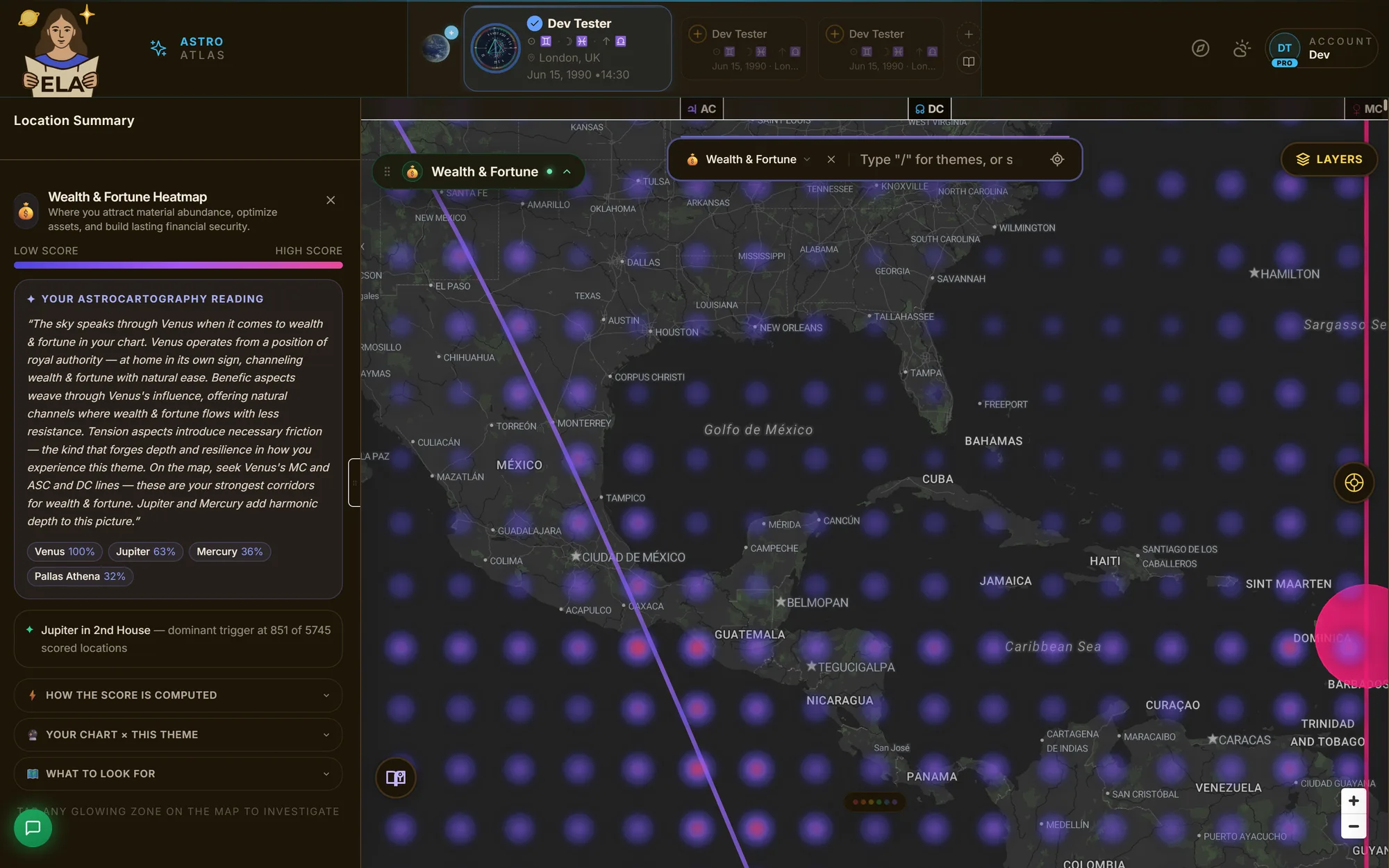
Reading a single line in isolation only tells part of the story. In practice, the places worth the most attention are usually the ones where several lines converge (a crossing), or where a line runs close enough to matter without being the only thing happening in that city. ELA Map computes every planet's line on every angle from the NASA/JPL ephemeris data used to navigate spacecraft. Every line interpretation traces back to named, written astrological doctrine, not generated text. Good places to go deeper:
- Reading the Map: the map's UI itself, search, layers, and how to turn lines on and off.
- Astrocartography Fundamentals: the four-angle mechanics from first principles, if locational astrology is new to you.
- Relocation Analysis: what actually shifts in your chart when you move to a place a line runs through.
- Human Design Astrocartography: the same rising/setting/overhead/underfoot logic, applied to your Human Design gates instead of natal planets.
- Best Places to Live: how to weigh whole places against each other once you can read the individual lines.
- Glossary: plain-language definitions for orb, angle, crossing, and every other term this page leans on.
See where your lines fall
Free. No card. Every planetary line from your chart, mapped across the Earth in about two minutes.
Get started