Human Design Environment: What It Is and What It Does Not Tell You About Where to Live
Human Design Environment names the kind of place that settles your body: Caves, Markets, Kitchens, Mountains, Valleys or Shores. What it means, where to find yours, and why it is about the room, not the city.

The short version. In Human Design, Environment names the kind of place that settles your body. It is about the setting around you, such as a room or a neighborhood, and not about a city. ELA Map shows you yours, and does not score cities for it, on purpose.
What Environment is
Human Design has an advanced layer of variables, which sit underneath the bodygraph most people know. One of them is Environment. It names the kind of place that settles your body, and it is one of six: Caves, Markets, Kitchens, Mountains, Valleys or Shores. It is read from the position of the Design Node in your chart.
The environments are a sort of inner balance point: the context in which your Design feels at ease, and a home's quality. The modifiers of inner and outer are very important when it comes to the six.
- Caves. Cozy, contained spaces.
- Markets. A lot of flow of things and of presented information.
- Kitchens. Access to lots of stuff.
- Mountains. Perspective.
- Valleys. Low and close, a setting where people and information move through. (placeholder, see note above)
- Shores. Places where two worlds meet, such as water and land. (placeholder, see note above)
Each one has two flavors: Exclusive or Blending Caves, Internal or External Markets, Wet or Dry Kitchens, Active or Passive Mountains, Narrow or Wide Valleys, Natural or Artificial Shores.
A first-time reader can find their Environment by casting their chart in ELA Map.
Why it is the room, not the city
The six names are about settings. They describe what the space around your body is like: the room you sit in, the surroundings you live and work in. A city contains many such settings, so a city cannot be one of them.
That matters for where to live. Two cities that are nothing alike can each have a neighborhood, a home and a workspace that suit you. A city that looks right on a map can still be full of rooms that do not. Environment is a question you answer at the scale of a door, not a continent.
Why the map does not use it
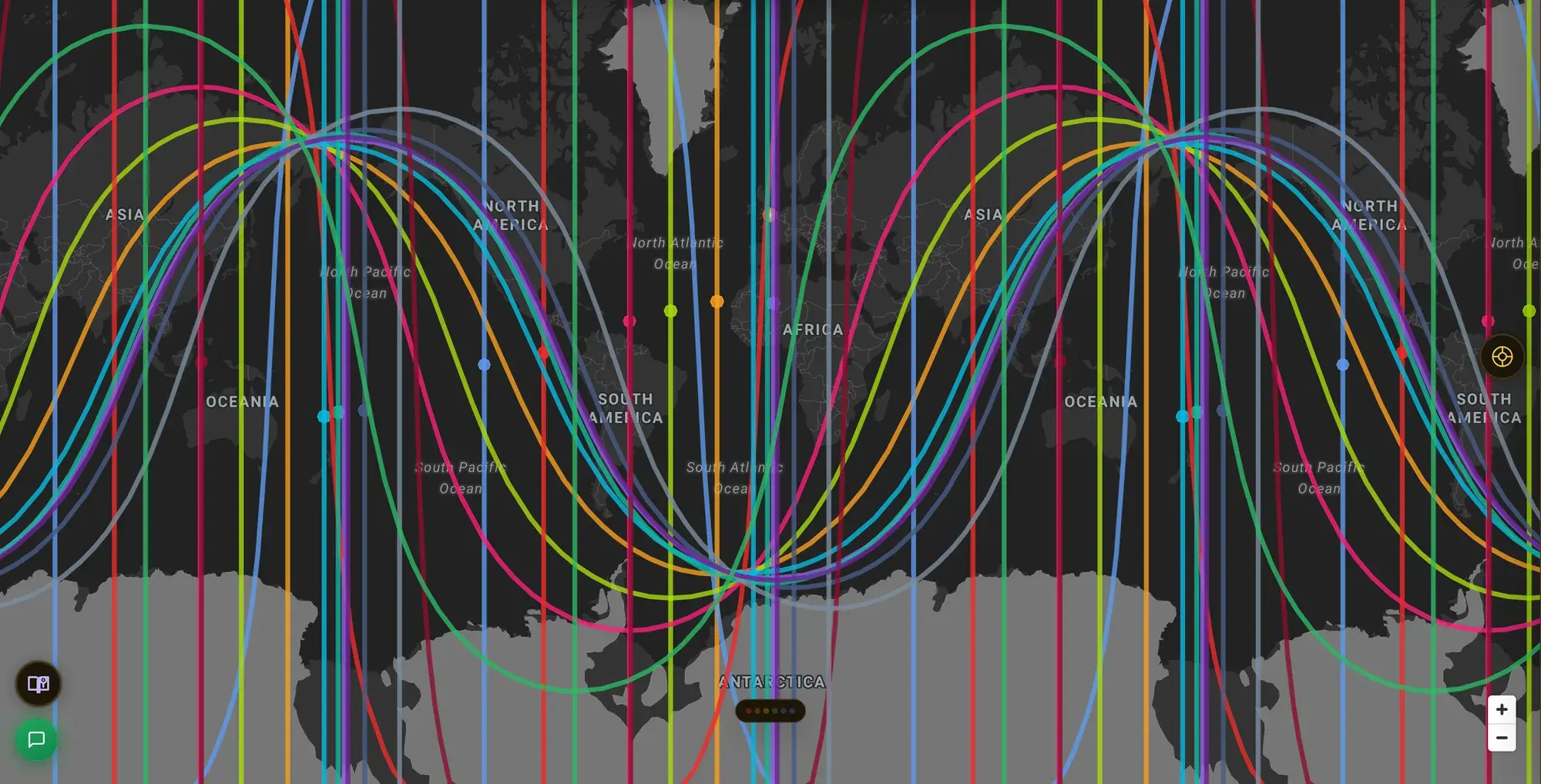
ELA Map's Human Design map reads your gates and channels: which parts of your defined structure run loud in a place, and where the noise is quiet enough to hear your own Authority. Astrocartography vs Human Design explains that difference.
Environment answers a different question. The map asks where does a place amplify me. Environment asks what kind of setting settles my body. Fusing them into one score would blur two questions into one answer, so ELA Map keeps them apart. The map shows where to look. Environment helps you decide what to look for once you are there.
Where to find yours
Your Environment appears with the other variables in the deeper Human Design reading of your chart. That deeper reading is part of Premium. The free bodygraph and basic reading do not include it.
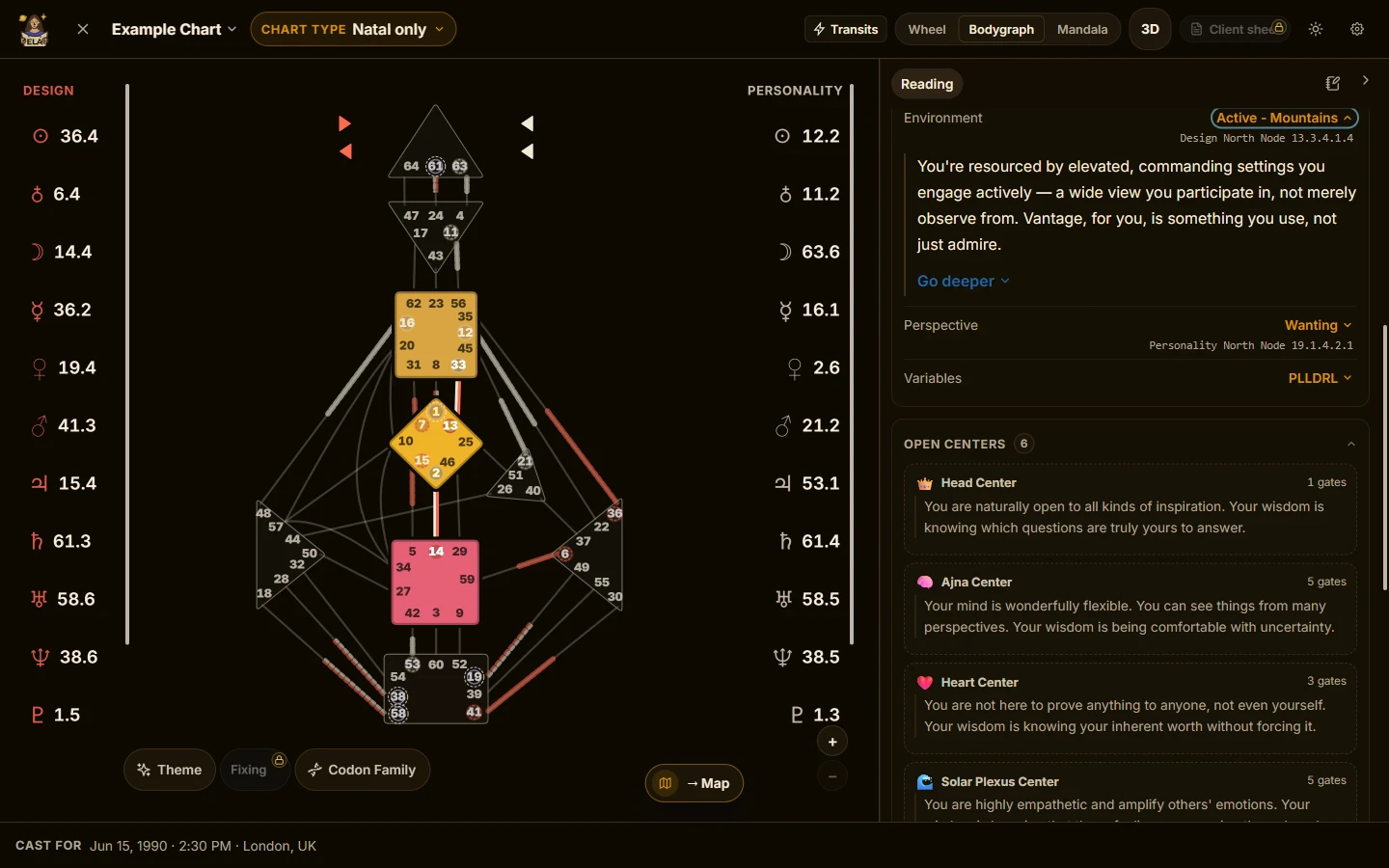
In the app: the reading beside the bodygraph lists Environment with the other variables. This example chart's reads Active Mountains, taken from the Design North Node.
How to use it with the map
A plain way to use the two together:
- Use the map to find a place. The Human Design map shows which of your gates and channels run loud where.
- Use Environment to shape the room. Once you are choosing a neighborhood, a home or a workspace, ask whether it is the kind of setting that settles you.
Neither is a rule. Both are things to notice.
What it cannot do
Environment will not name your city, and it will not tell you that a place is right or wrong for you. The bodygraph does not relocate. A place can bring out or quiet what is already in your design, and your actual experience of it is your own.