Astrocartography vs a Relocation Chart: What Each One Shows
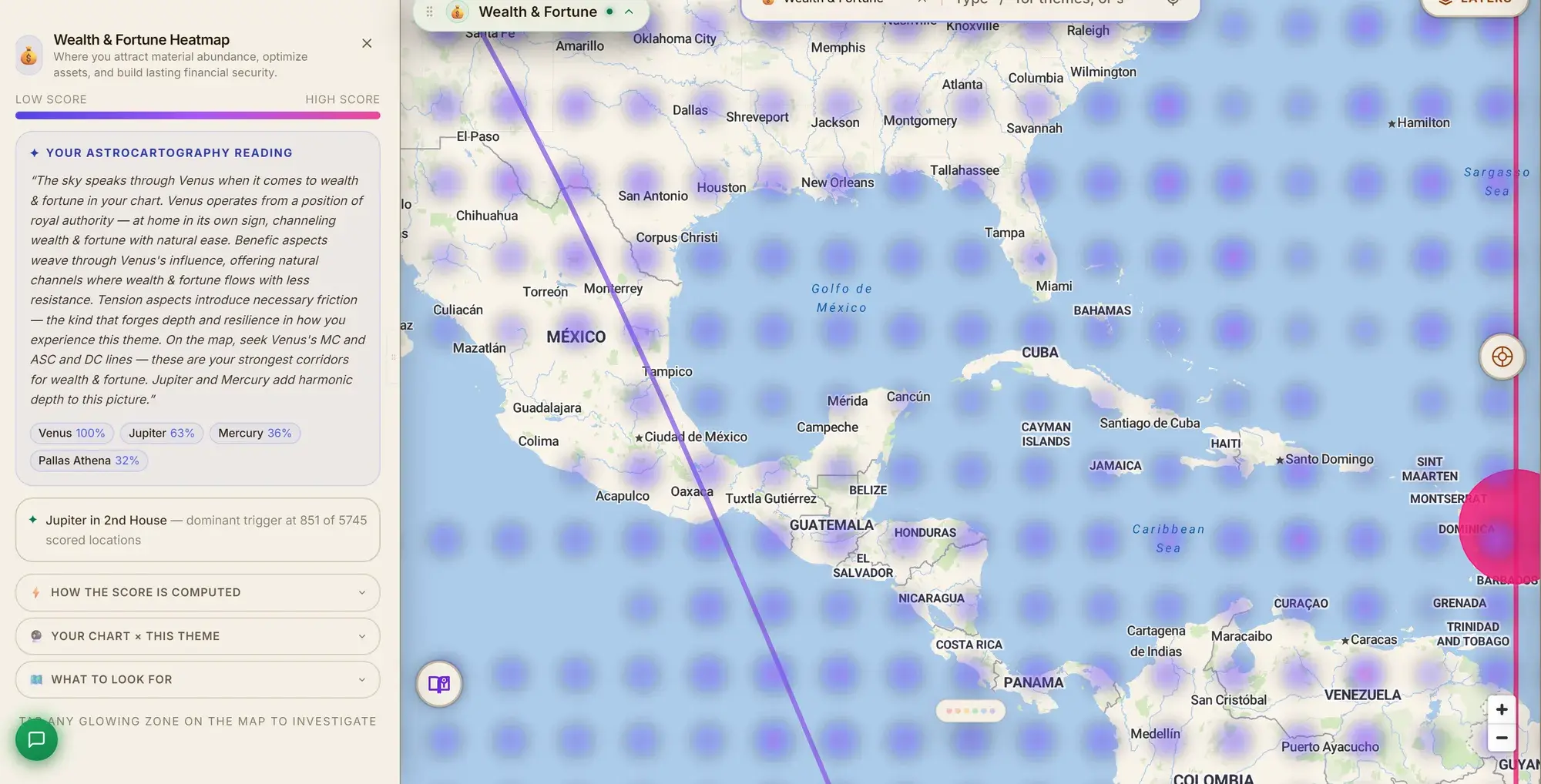
Astrocartography vs a relocation chart: the same astronomy asked two ways. One scans the whole Earth for where a planet is angular; the other recasts your chart for a single place.

The short version. Astrocartography and a relocation chart are the same astronomy asked two ways. Astrocartography scans the whole Earth for where a planet is angular. A relocation chart recasts your chart for one place and reads everything there. Scan with the first. Decide with the second.
The same chart, two questions
Both start from the moment you were born and the place you were born. From there:
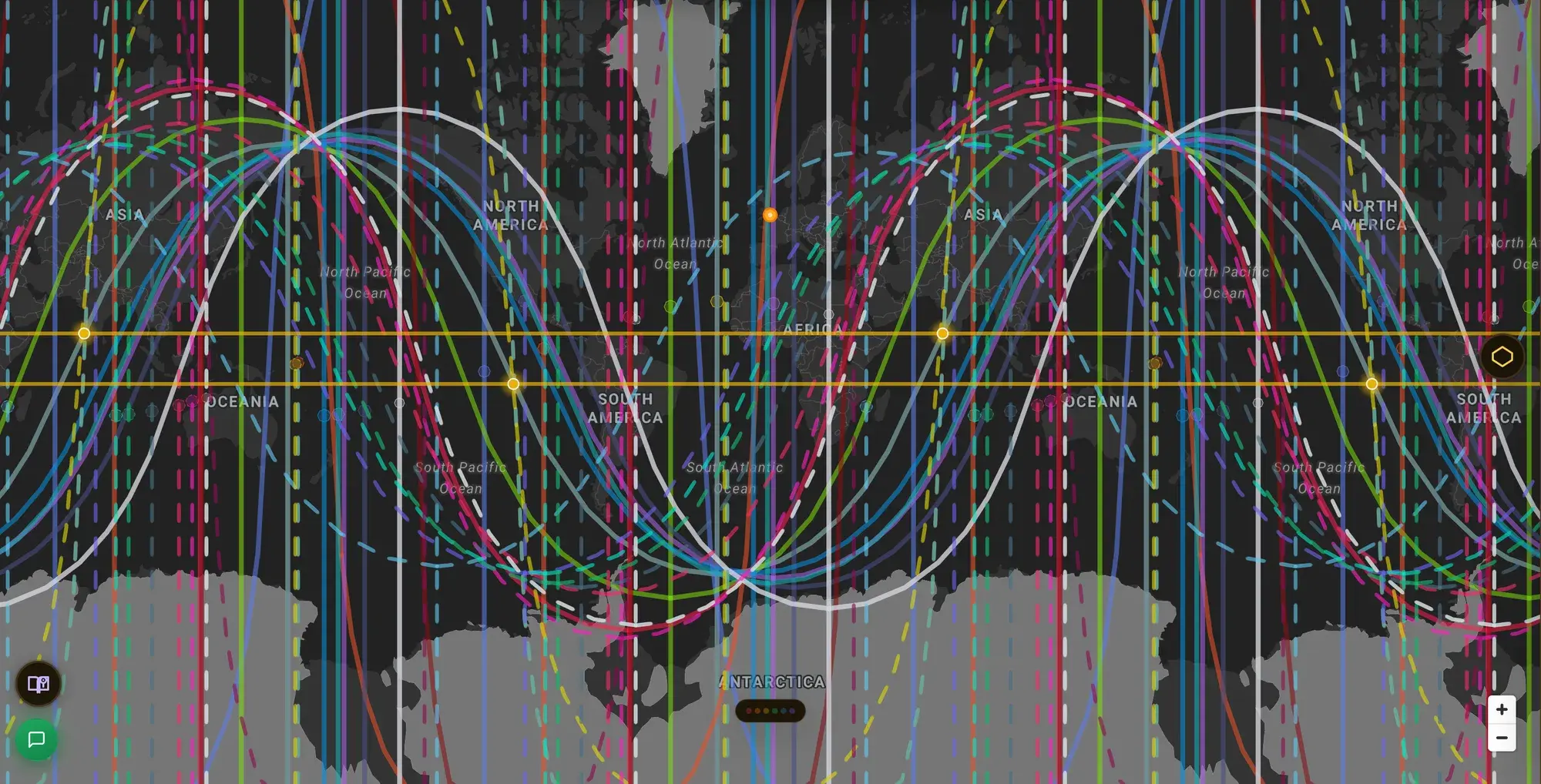
- Astrocartography draws each planet as four lines across the globe: where it was rising (AC), setting (DC), overhead (MC) and underfoot (IC). The question it answers is where on Earth is this planet angular for me?
- A relocation chart keeps the same moment but moves the observer to another place. The planets stay in the same signs. The angles and the houses are recast for that place. The question it answers is what does my whole chart look like when I am here?
If you want the longer version of the first, start with the beginner's guide. The second is the older practice. Astrologers have been recasting charts for a new home for a long time, one place at a time.
They agree on the angles
This is the part that makes the two methods fit together. A planet's line is the set of places where that planet sits exactly on an angle. So if a line runs through a city, the planet is on an angle in the relocation chart for that city.
Here is an example chart, the demo chart we test everything on: born 15 June 1990 in London. It is not a real person. Saturn's IC line runs about 50 kilometers from Milan.
Recast that chart for Milan and the relocation chart says the same thing in its own language: the IC lands at 23° Capricorn, and Saturn sits at 24° Capricorn, six-tenths of a degree away, in the fourth house. The line and the chart are one fact, seen from two places.
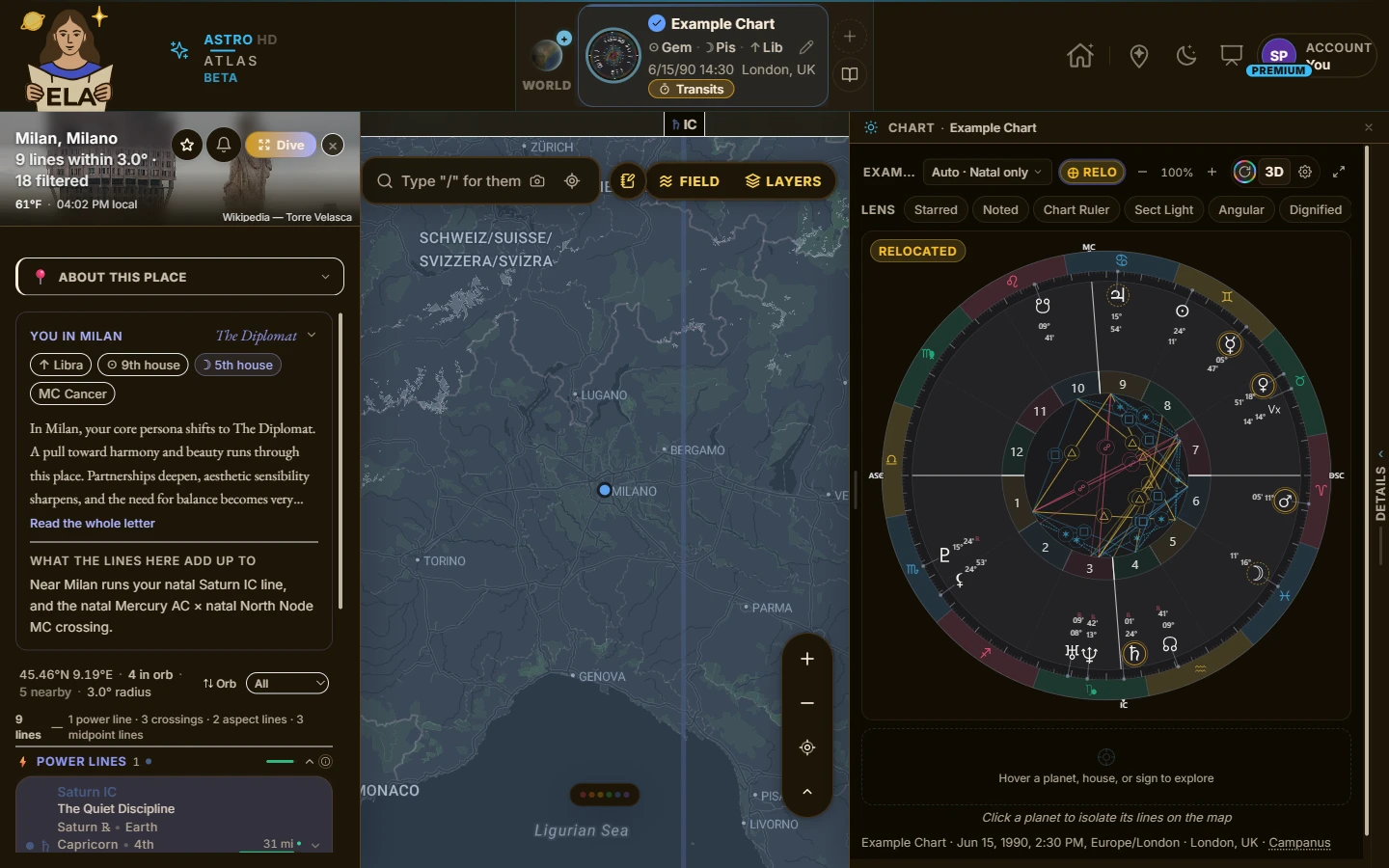
The place panel for Milan on the example chart, with the relocated wheel beside the map.
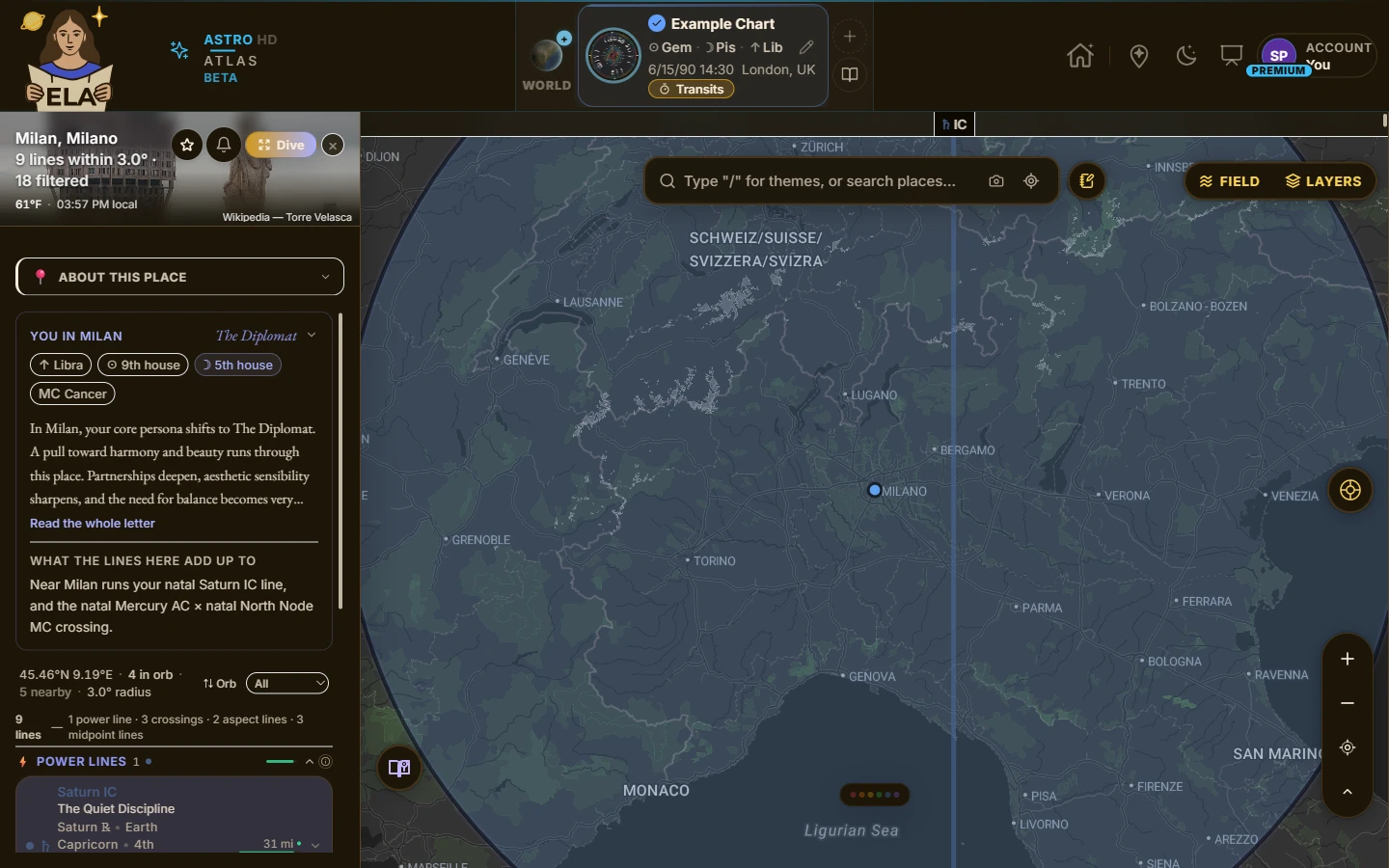
The same place on the map: Saturn's IC line runs a short way east of Milan.
What the chart adds that the line cannot
The line tells you one planet is angular. It does not tell you what else changes. The relocation chart does:
- The angles get new signs. In the Milan chart the Ascendant is 19° Libra and the Midheaven is 23° Cancer.
- The houses move. Eight of the chart's bodies change house between London and Milan. Pluto moves into the first house. Venus moves into the seventh.
- Everything else is still there. Every planet keeps its sign and degree. A relocation chart never changes who you are, only what each part of you is standing on.
That is why the two are partners and not rivals. A map is a good way to find places. A chart is a good way to read one.
Where they differ
| Astrocartography | Relocation chart | |
|---|---|---|
| Question | Where is this planet angular? | What does my whole chart look like here? |
| Scope | The whole Earth at once | One place at a time |
| Best for | Scanning, shortlisting, seeing patterns | Reading one city closely |
| Shows | Lines and the places they cross | New angles, houses and planet placements |
| House system | Not involved | Matters for the cusps between the angles |
The last row is worth a pause. The four angles are the same in every house system, so lines never depend on one. A relocation chart's houses do. ELA Map uses one system throughout (Campanus) and can lay a second system over a chart as a ghosted ring, so you can see what moves without re-casting anything.
How to use both
A plain way to work, whichever tool you use:
- Scan. Look at the map for the places where the planets you care about are angular. Do not worry about the whole globe, find a handful.
- Read. For each place worth a closer look, open the relocation chart. Read the new angles, see which planets changed houses.
- Compare. Put two or three places side by side. The differences are where the decision is.
- Stay honest. Neither is a verdict. A place also has a job market, a visa rule and people in it.
In ELA Map, double-clicking a place opens a summary of the lines near it, and the place panel shows the relocated chart for that spot. The relocated Ascendant and Midheaven signs are free for any city. The whole relocated chart is part of Premium. How to read your map, step by step walks the first move.
What neither one is
Neither a line nor a relocated chart will tell you where to move. They describe what a place tends to call out of you. The rest is your life.
If you are comparing tools rather than techniques, how to choose an astrocartography tool lists eight things you can check yourself. And if you are weighing Human Design too, astrocartography vs Human Design covers what that adds, and what does not relocate.