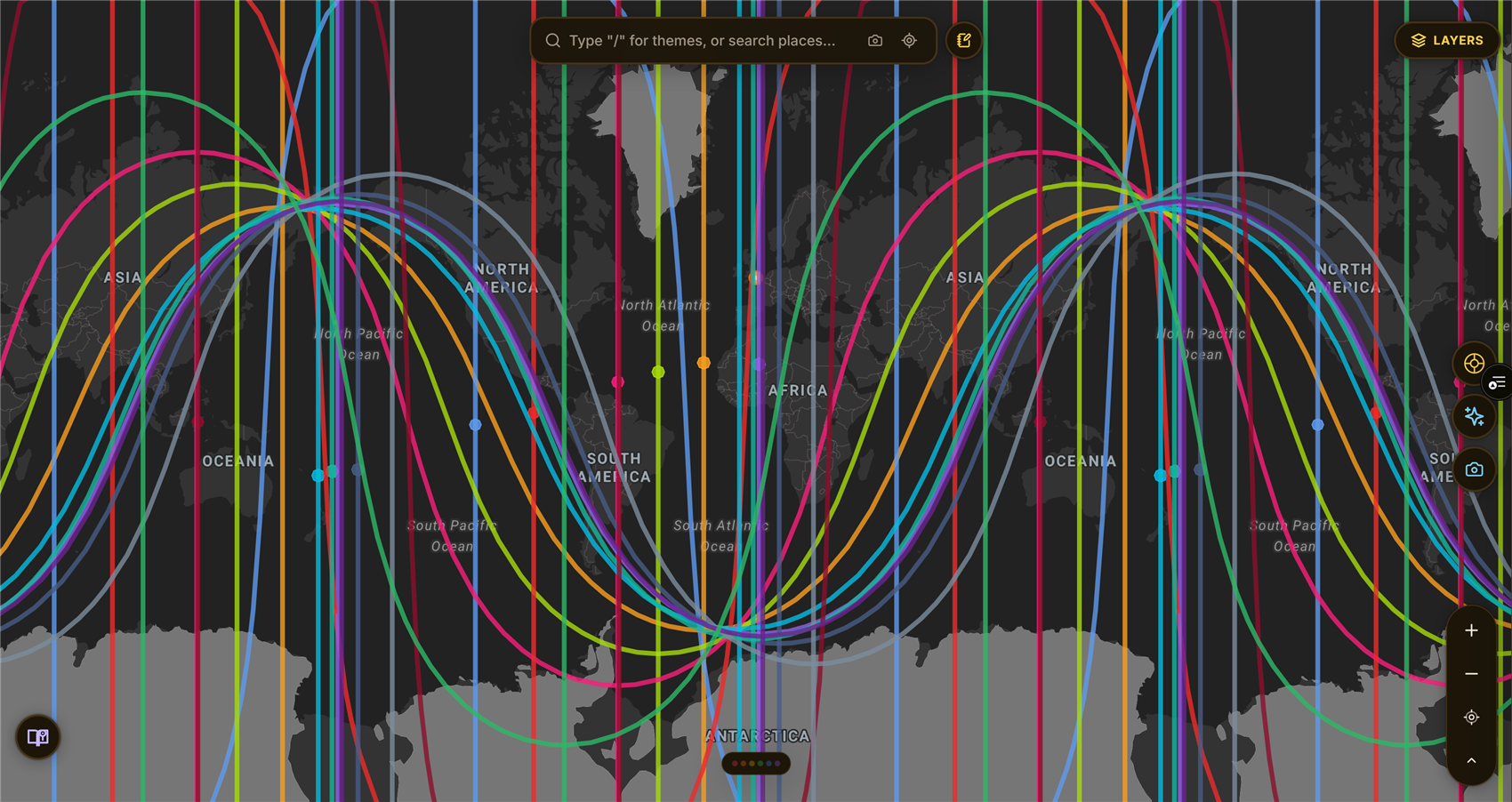
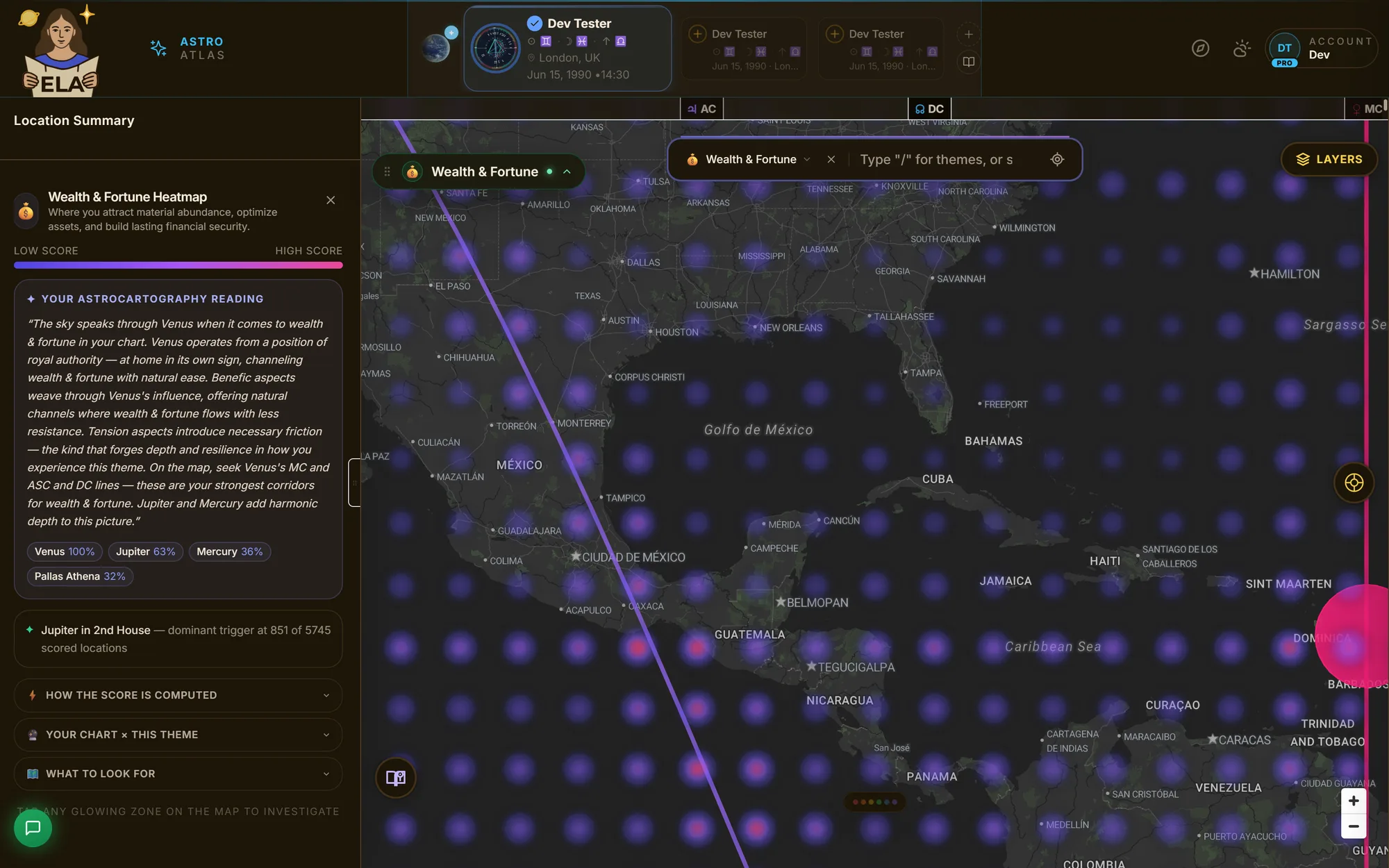
Astrocartography for Love: Reading Your Map for Relationships
How to read an astrocartography map for love and relationships: which angle matters, which planets to look at first, what a love heatmap adds, and what no map can promise.

Photo: Sunira Moses / Unsplash
The short version. For love, look at the Descendant (DC) and at Venus first. The Descendant is the angle for what arrives through other people. The Love and Relationships heatmap then scores every place on Earth for partnership. A map shows where your chart leans toward connection. It cannot promise who you meet.
What a love map is looking at
Every astrocartography line marks one of four angles. The two that matter most for relationship are:
- DC, the Descendant. The point where a planet was setting. It is the angle for other people, partners and what arrives through them.
- AC, the Ascendant. The point where a planet was rising. It is the angle for how you meet the world and what you bring to a room.
A planet's line on the DC is that planet's themes arriving through other people in the places the line crosses. Venus there reads as one thing and Saturn as another. You can read how each one is described for your own chart by opening the line's card on the map.
The lines to look at first
You do not need all of them. For love, start with these:
- The Descendant lines. Every planet has one. Look at which of them run near the places you care about.
- The Venus lines. Venus is the planet of attraction and what you value. Look at its DC line, and at its AC line.
- Crossings. Where two of your lines cross, two themes share one latitude. A crossing labeled Jupiter DC × Pluto AC, for example, tells you which two lines meet there. This page explains the classical name.
Tone matters more than label. A Mars line on the Descendant and a Venus line on the Descendant are both about partnership, in different ways. The map describes terrain, not verdicts. Reading your map, step by step shows how close is close enough.
What the love heatmap adds
Reading lines one at a time gets slow. The Love and Relationships heatmap does the holding-it-all-in-your-head part for you. It scores every point on the globe for partnership, using the seventh house and the Descendant, with secondary weight on the fifth house. Brighter is where your chart has more going for that theme.
It is arithmetic on your chart, not an opinion, so the same chart gives the same map twice. Click any bright spot and the panel shows what is driving the number. How the heatmap works has the full method.
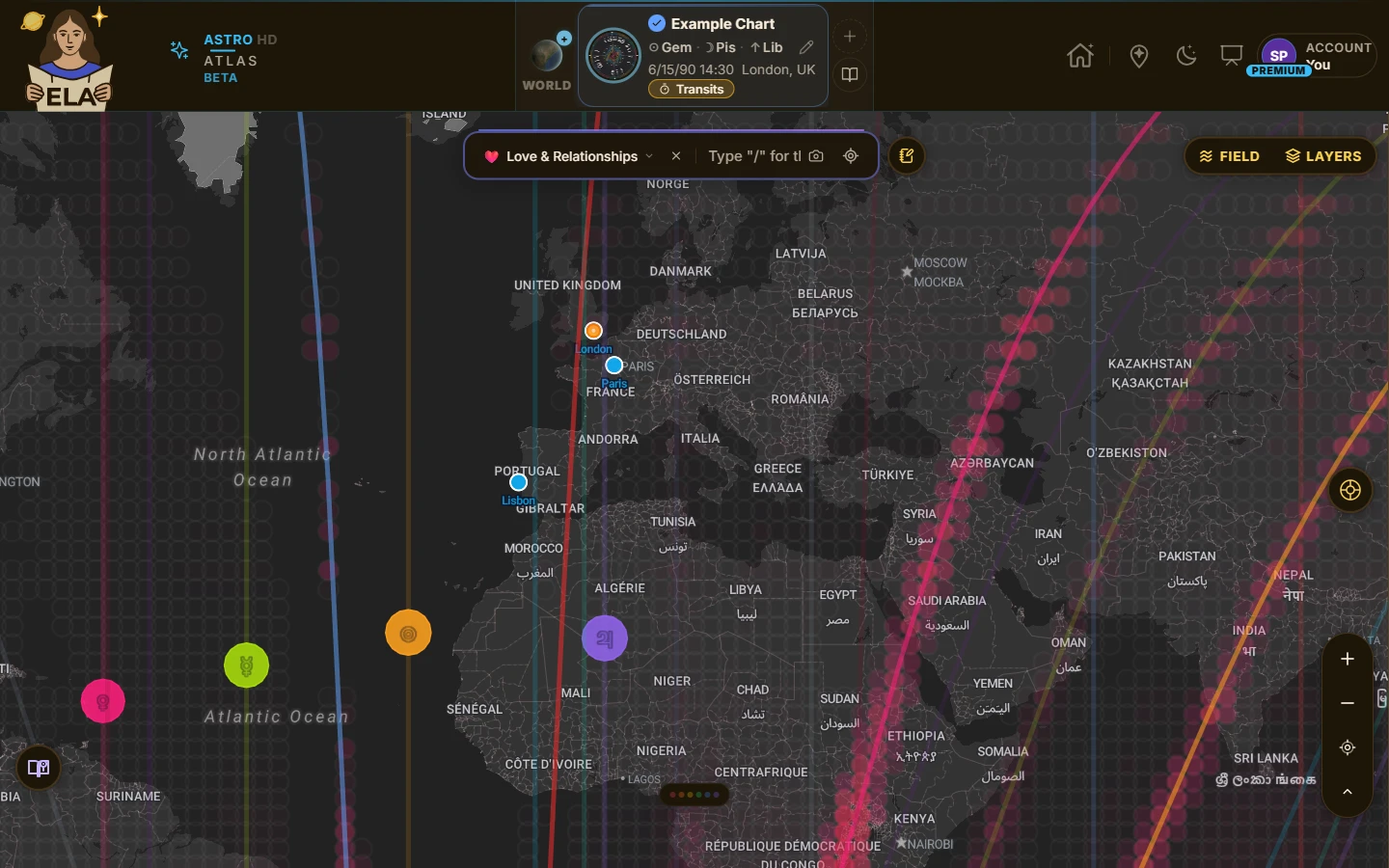
The Love and Relationships theme on the example chart, over Europe and North Africa.
The Love and Relationships heatmap is free in ELA Map. The other themes are part of Premium.
A good way to check it against your own life
Do not start with somewhere exotic. Double-click a place you have lived, a city where you loved or a city where you were lonely, and see which lines run through it. If the map says a place carries your Venus and you remember it as warm, you have learned the language. If it does not match, that is information too. Then point it somewhere new.
Two people on one map
If the question is about a specific relationship, relational maps put two charts on one globe and mark the places where both people's lines meet. That is a different reading from your own and is covered in family relocation.
What a map cannot do
A map cannot tell you that you will meet someone in a given city. It shows what a place tends to ask of you. Whether you meet anyone is a matter of living there. Use it as a lens for thinking about connection, not as a promise.