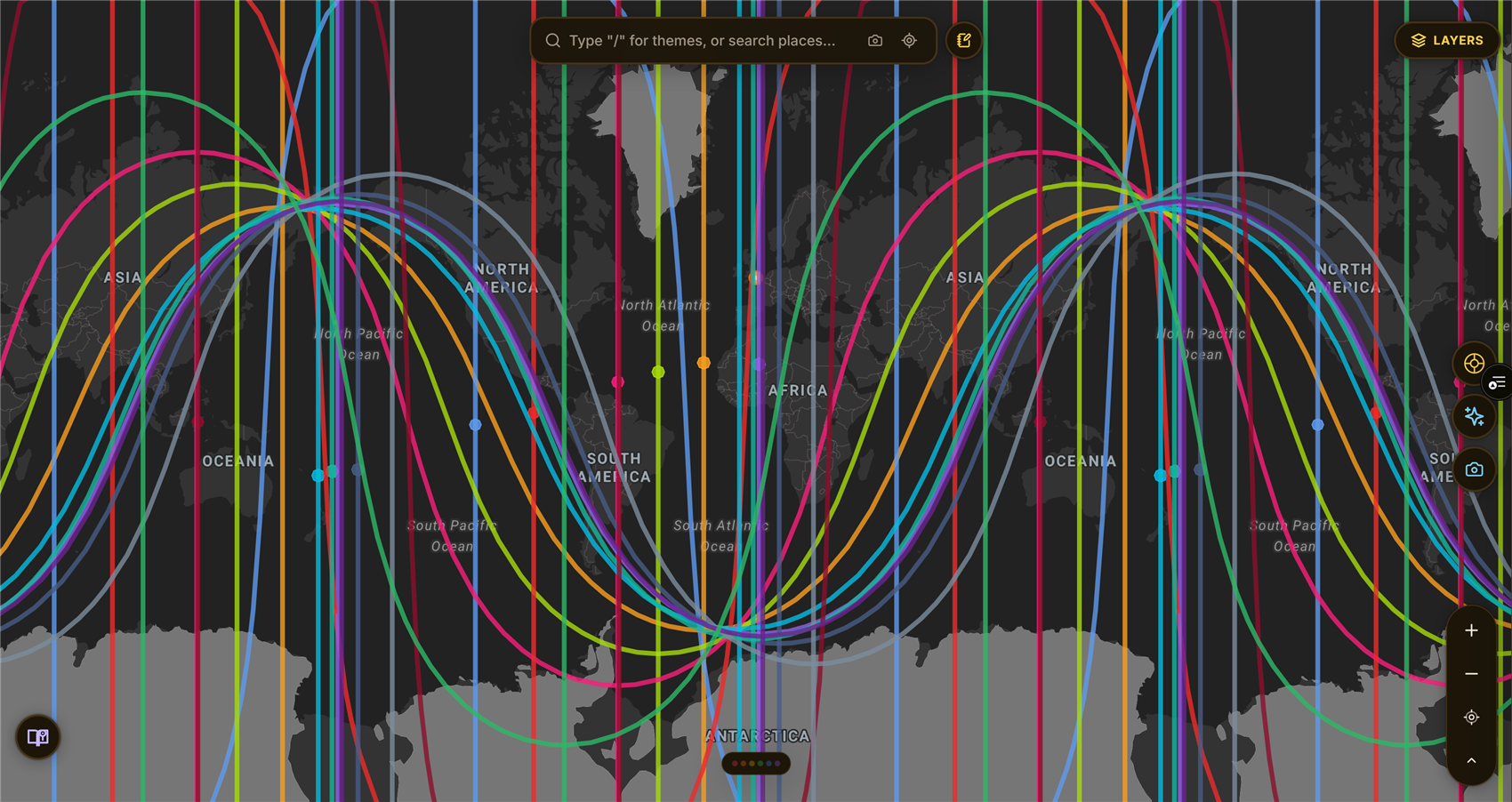
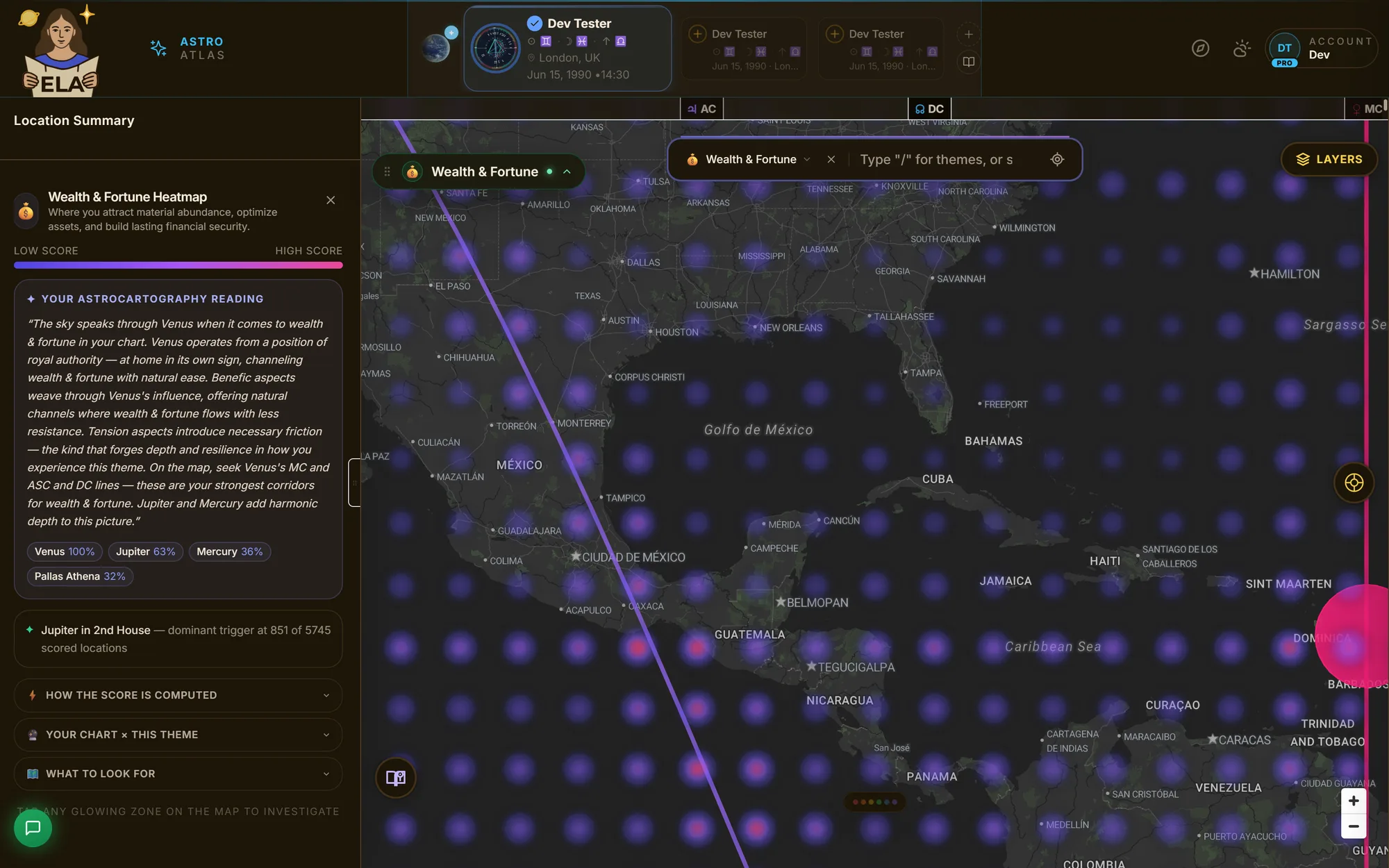
Astrocartography for Career: Finding Where Your Work Is Seen
How to read an astrocartography map for career and purpose: the Midheaven line, which planets to look at, what the Career and Purpose heatmap scores, and what a map cannot do for a job search.

Photo: Marsumilae / Unsplash
The short version. For career, look at the Midheaven (MC) and at the planets you want to be known for. The Midheaven is the angle for your public, visible life. The Career and Purpose heatmap scores every place for vocation. A map shows where your chart is loud about work. It does not replace a job market.
What the career angle is
Every astrocartography line marks one of four angles. For work, two matter:
- MC, the Midheaven. The point where a planet was directly overhead. It is the angle for your public life, your visible work and what you are known for.
- AC, the Ascendant. The point where a planet was rising. It is the angle for how you show up, what you bring into a room before you speak.
A planet's MC line is that planet's themes showing up in your public life in the places the line crosses. The planet is the flavor of the work. The angle is where it shows. You can see how each is described for your chart on the line's own card.
The lines to look at first
- The Midheaven lines. Each planet has one. Look at which run near the places you could work.
- The lines of the planets you want to be known for. A reader who wants to lead looks at the Sun. One who wants to build something lasting looks at Saturn. One who wants to teach or publish looks at Jupiter and Mercury. This is classical signification, not a rule.
- Crossings. Where two of your lines cross, two themes share one latitude. A crossing labeled Jupiter MC × Saturn AC, for example, names the two lines that meet there. This page explains the classical name.
Tone matters more than label. Read them as terrain, not verdicts: a heavy line can be just the structure a career needs. Reading your map, step by step shows how close is close enough.
What the career heatmap adds
The Career and Purpose heatmap scores every point on the globe for vocation, using the tenth house and the Midheaven, with secondary weight on the first house. Brighter is where more of your chart is pointed at work and visibility.
It is arithmetic on your chart, not a language model's opinion, so the same chart gives the same map twice. Click any bright spot and the panel shows what is driving it. How the heatmap works has the full method.
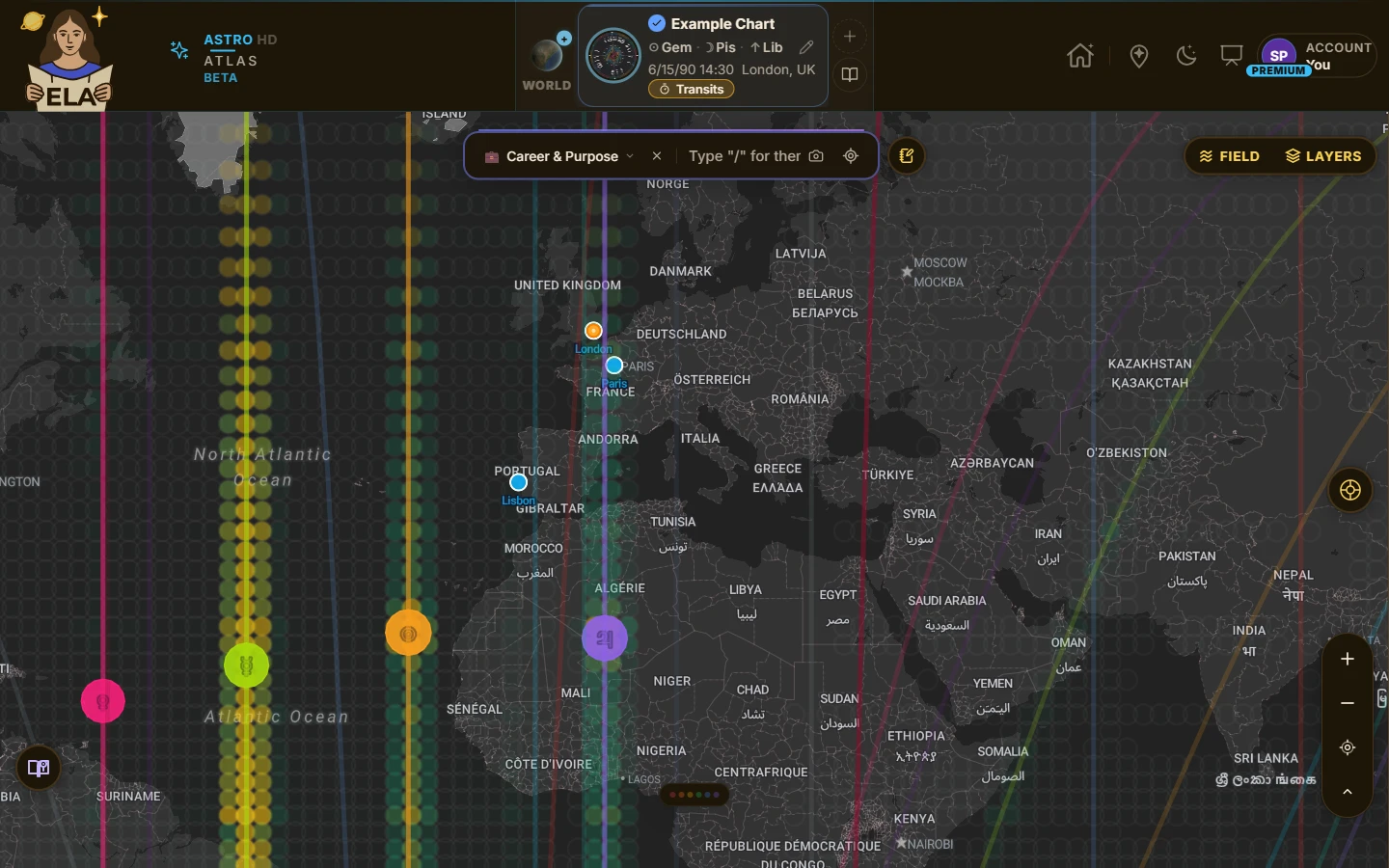
The Career and Purpose theme on the example chart, over Europe and North Africa.
The Career and Purpose theme is part of Premium. The Love and Relationships theme is free.
Remote work changes the question
If you work from anywhere, the question is not which city has my jobs but where do I do my best work. A map can inform that. It cannot tell you about visas, tax or time zones, which are covered in the digital nomad guide. And you do not have to move at all: astrocartography without traveling shows how to read the lines over where you already live.
What a map cannot do
A map cannot tell you that a city will give you a promotion or a client. It shows what a place tends to call out of you in your public life. A job market, a visa, pay and your own readiness decide the rest. Use the map as one input.