Which Astrology Map Do You Need? Astrocartography, Relocation Chart, Local Space or Human Design
Astrocartography, a relocation chart, local space and Human Design cartography each answer a different question. A plain guide to which one to start with, and when you need more than one.

Photo: Gavin Allanwood / Unsplash
The short version. Each of these answers a different question. Pick by the question, not by the name. Most people end up using two.
Pick by the question
| If you are asking... | Use | Because |
|---|---|---|
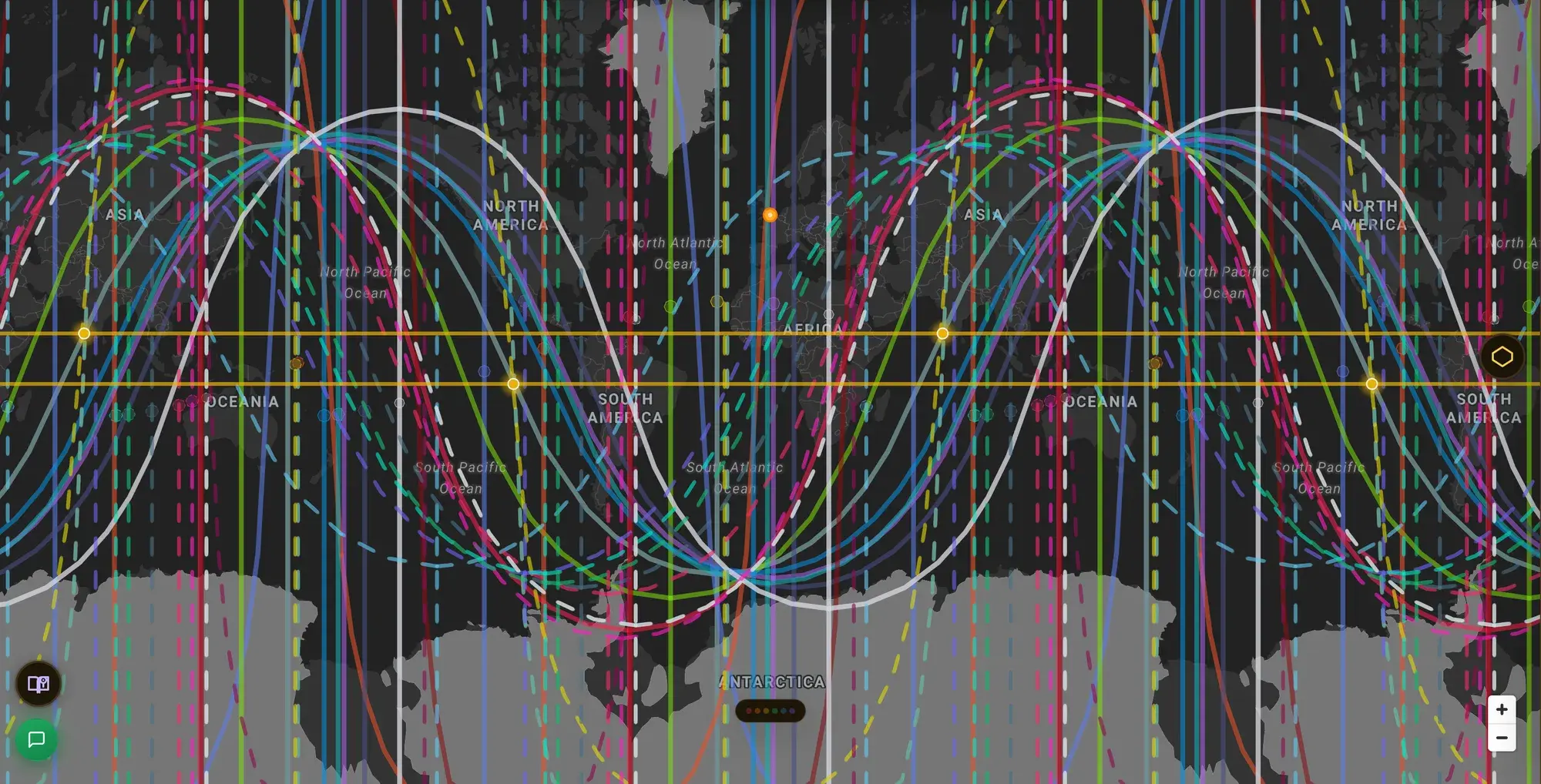
| Where in the world is this planet strong for me? | Astrocartography | It draws each planet as lines across the whole Earth. |
| What does my whole chart look like in this one city? | A relocation chart | It recasts your chart for that place, with new angles and houses. |
| Which direction did a planet point from where I am? | Local space | It draws straight lines out from one place. |
| Which defined parts of me run loud in this place? | Human Design cartography | It reads the same geometry through gates and channels. |
| Which places score highest for love, career or wealth? | A heatmap | It scores every point on the globe for a theme. |
The usual order
Most people who use these tools well use them in a sequence, not as rivals.
- Scan with astrocartography. Find the handful of places where the planets you care about are angular. The map is the fast way to see the whole Earth. A heatmap helps if you would rather start from a theme.
- Read with a relocation chart. For each place on your shortlist, open the relocated chart and read the new angles and houses. Astrocartography vs a relocation chart walks this step.
- Add direction with local space. Once you are in a place, local space says which way the planets point from your door. Astrocartography vs local space explains it.
- Add Human Design if it is your lens. It reads the same place as conditioning: which parts of you run loud, and where it is quiet enough to hear your own Authority. Astrocartography vs Human Design is the long version.
Do I need both?
Not to begin. If you have one question, one tool answers it, and there is no reason to buy or learn more than that.
You need more than one when the question gets specific. A map tells you which cities to look at. It does not tell you what your whole chart does in each. A relocation chart tells you what your chart does in one place. It does not tell you which of the thousand places to open. That gap is why they are usually paired.
What none of them can do
None of them will tell you where to move, and none of them is a prediction. A place also has a job market, a visa rule, a cost, and people in it. These tools describe what a place tends to call out of you. How to read your map, step by step is a good first sit-down, and how to choose an astrocartography tool lists eight things to check before you pick one.
In ELA Map
ELA Map puts all of these on one globe: the lines, the relocated chart for any place you click, local space lines, a Human Design mode and the heatmap. You can switch between them without exporting anything. The lines and a relocated Ascendant and Midheaven for any city are free. The deeper layers, such as the whole relocated chart and local space, are part of the paid plans. See the plans.