Why a Personality Quiz Can't Tell You Where to Live
Personality and lifestyle quizzes match your preferences to places. Here is what that gets right, what it cannot see, and what a birth-chart map asks instead.

The short version. A quiz tells you where your preferences point. That is a useful filter, and it is not the whole question. A birth-chart map asks something else: what a place tends to call out of you.
What a quiz does well
If you want to know where the weather is mild, the rent is within reach and the language is one you speak, a quiz or a spreadsheet is the right tool. It takes things you can state and turns them into a shortlist. That is not a small thing, and no map replaces it.
What a quiz cannot see
A quiz has one source of information: your answers. That has three limits.
- It only knows what you would say. If you do not know that you are the kind of person who needs a quiet street, the quiz cannot tell you.
- Your answers move. The same person answers differently in a good week and a bad one, before a breakup and after. The match changes with the mood.
- It describes you, not the place. A quiz matches your answers to a label on a city. It cannot say how that place will feel once you are standing in it.
What a birth-chart map asks instead
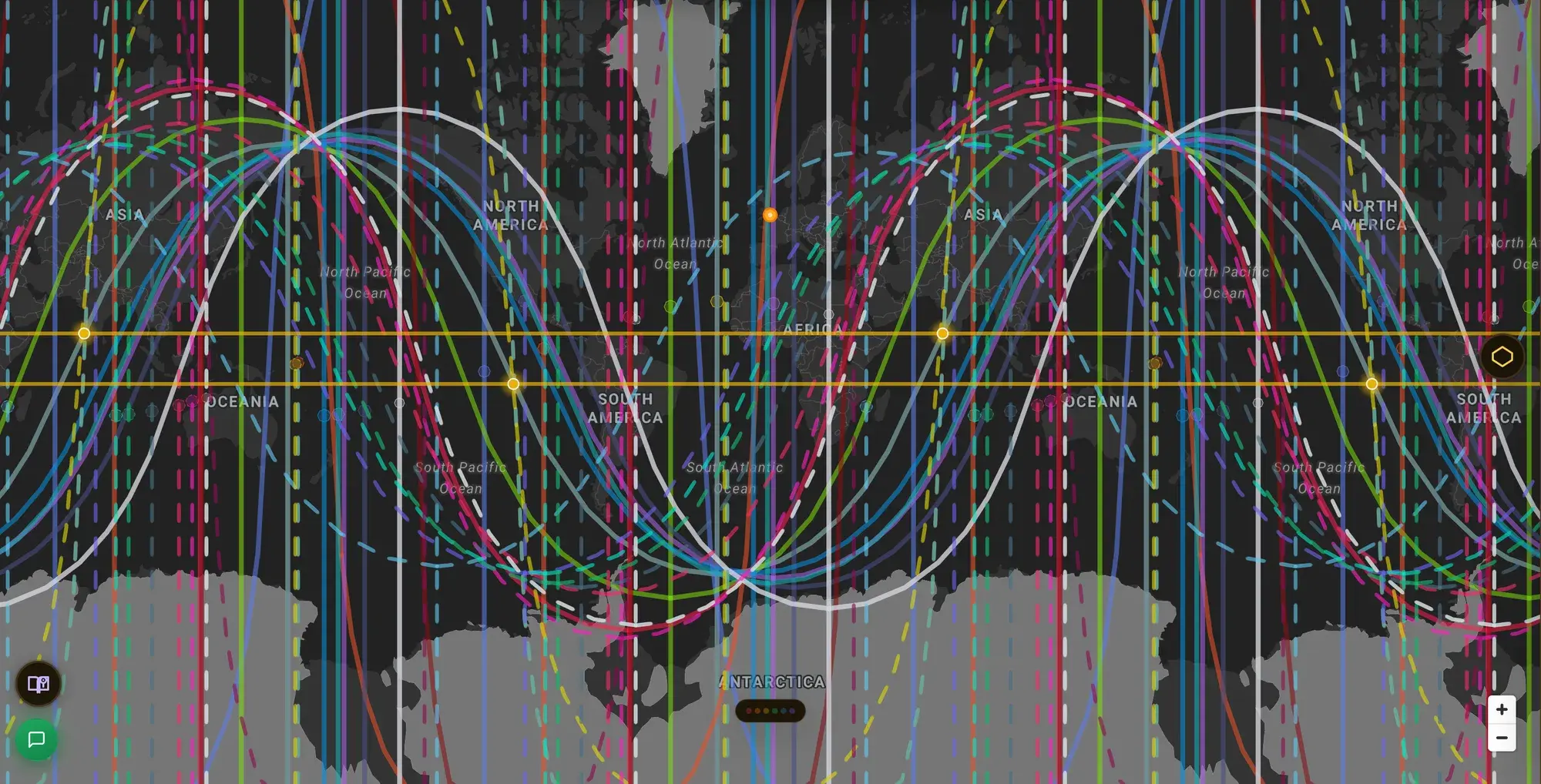
A birth chart is built from three things that never change: your date, your time and your place of birth. A map draws that chart across the Earth, so you can see which places carry which parts of it.
That does not make it more true. The astronomy is checkable: planetary positions are facts, and how to tell if a map is accurate shows what to look for. The interpretation is a symbolic tradition, not a scientific finding, and an honest answer to "is it real" says so. What it gives you is a different kind of question. A quiz asks what do I like. A map asks what does this place call out of me.
Using both
They are not rivals.
- Start with what you know. Budget, climate, language, family. Use a quiz, a spreadsheet or your own list to turn those into a handful of places.
- Then ask the second question. For each place, look at what your chart says about it. How to read your map, step by step is a good first sit-down.
- Check it against your life. Double-click a place you have lived and see whether the map matches what you felt there. If it does, you have learned the language. If it does not, that is information.
What neither can do
Neither predicts whether you will be happy in a place. Work, visas, money, friends and family are not things a quiz or a line overrides. Use both as lenses, not as verdicts.
Where ELA Map fits
ELA Map has no quiz. You enter your birth date, time and place, and the map draws from that. Start here walks the first ten minutes.